There are trips that completely transform the perspective with which we see the world, and the road to Santiago de Compostela is, without a doubt, one of them. More than just a hiking route, this ancient network of paths represents an absolute immersion in the history, art, and tradition of Spain.
If you are looking for an experience where the beauty of centuries-old architecture and human exchange mix with language learning, this adventure is the perfect opportunity. Walking these trails means experiencing Spanish culture firsthand, uniting sport, personal growth, and the magic of truly connecting with people from all over the planet.
Table of Contents
- The magic of the Camino de Santiago pilgrimage
- Camino de Santiago routes and stages: choose your own adventure
- The city of Santiago de Compostela: the climax of your trip
- Learning Spanish: the opportunity to prolong your immersion
- Camino de Santiago: how to do it with the best support
- Frequently Asked Questions
The magic of the Camino de Santiago pilgrimage
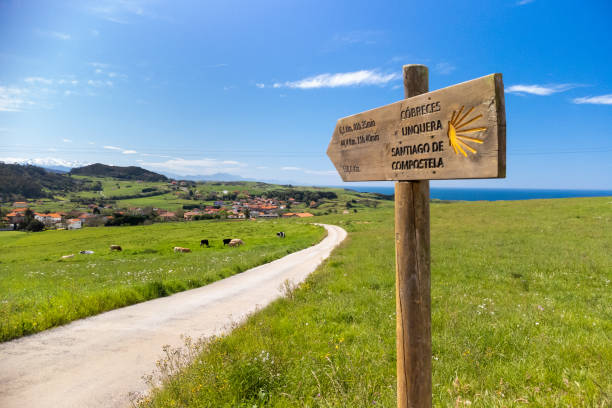
For hundreds of years, travelers from all corners of the world have undertaken the Camino de Santiago pilgrimage. Along the route, always guided by the iconic Camino de Santiago shells, walkers discover a true open-air museum. Every step brings you closer to Romanesque churches, imposing stone monasteries, ancient pilgrim hospitals, and legends that still survive in small villages.
It is a journey that connects directly with European historical heritage. Furthermore, the supportive and relaxed atmosphere on the route allows you to lose your fear and practice the language in a totally natural way, sharing everyday experiences with both locals and other pilgrims.
Camino de Santiago routes and stages: choose your own adventure
The network of trails is vast and diverse. Depending on your time availability and what you want to experience, the number of kilometers you will cover will change enormously. Knowing the options beforehand will help you organize your stages comfortably and realistically before starting your linguistic experience.
| Route | Main characteristics | Ideal for… |
|---|---|---|
| French Way (Camino Francés) | The most historic and popular route. It crosses the north of the peninsula connecting towns full of medieval and Gothic art. | Meeting other travelers and enjoying great social and cultural interaction. |
| Portuguese Way (Camino Portugués) | A trail with gentle slopes that enters Galicia from the south, surrounded by lush forests and vineyards. | Those looking to admire the local architecture in a quiet and unhurried setting. |
| English Way (Camino Inglés) | The route starts from Ferrol or A Coruña, covering much shorter distances towards the capital. | Those who want to complete the route in a few days before their classes. |
| Northern Way (Camino del Norte) | It borders the Cantabrian coast offering spectacular cliffs and green landscapes with slightly more demanding terrain. | Nature lovers looking to connect with the environment and overcome a physical challenge. |
In addition to walking, many adventurers decide to do the Camino de Santiago by bike, a fantastic alternative to cover a wider variety of landscapes and assimilate different local accents in less time. To thoroughly discover each route and plan your days with precision, we recommend exploring the official Camino de Santiago routes, where you will find all the technical and practical details.
The city of Santiago de Compostela: the climax of your trip
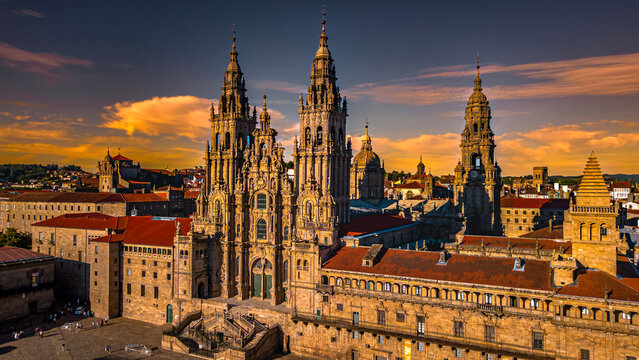
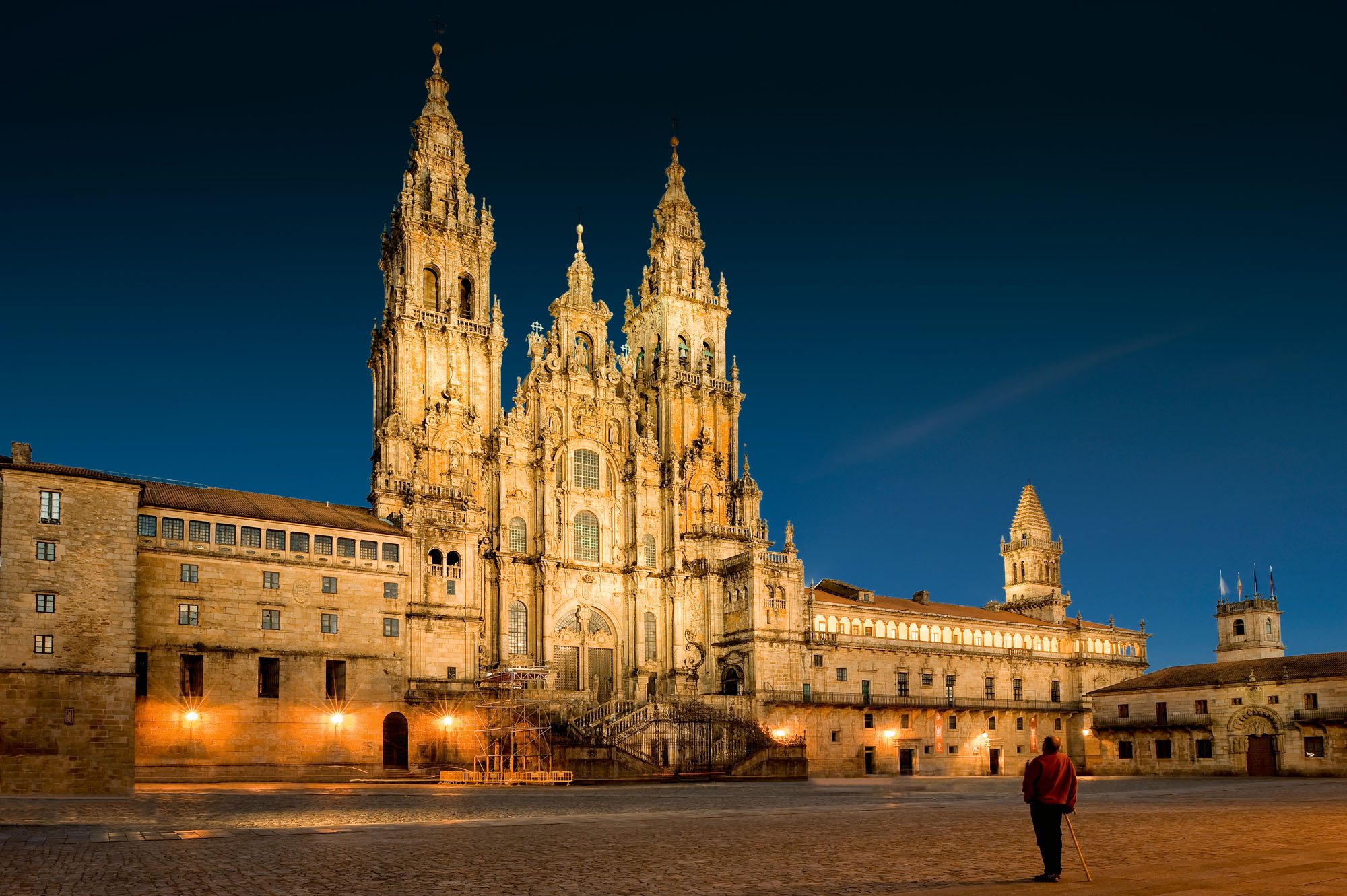
Arriving in the city of Santiago de Compostela is a deeply emotional moment. Its imposing cathedral welcomes you in the emblematic Obradoiro Square, marking the physical end of the route. One of your first stops will be the Santiago Pilgrim’s Office. There, by showing the Camino de Santiago stamps that you have been collecting in your credential throughout the stages, you will receive “La Compostela,” the historical document that certifies your effort and perseverance.
But the end of the route is only the beginning of your adventure in the city. Santiago is a vibrant, university-driven, and lively city, with stone streets full of terraces, libraries, traditional music, and an inexhaustible cultural atmosphere.
Learning Spanish: the opportunity to prolong your immersion
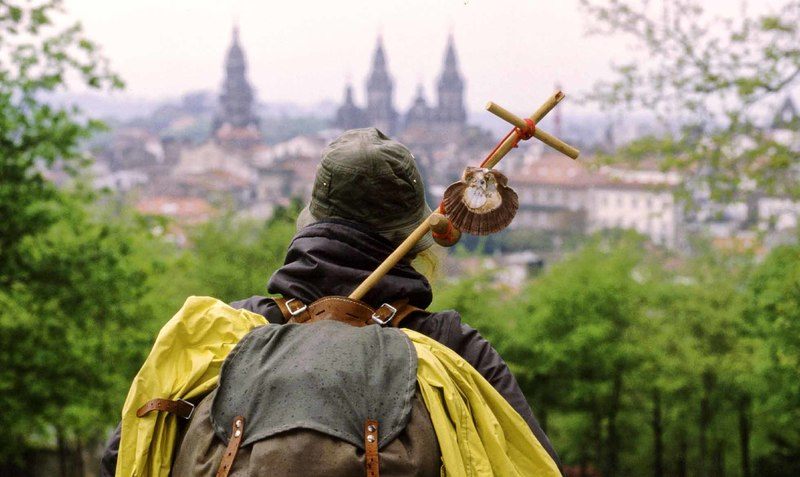
After days of walking, reflecting, and conversing, your mind will be completely open and receptive. Taking advantage of this mental state to consolidate your knowledge in an academic environment is the most natural step you can take. Choosing to study Spanish in Santiago de Compostela allows you to extend your stay, blending fully into local life without the rush of a passing traveler.
You can customize your experience to the maximum in accredited and centrally located schools such as Academia Iria Flavia. For example, if you wish to have your mornings busy assimilating vocabulary and grammar, but prefer free afternoons to visit museums or taste Galician gastronomy, the Intensive Spanish Course 20 offers a great balance.
If you prefer a more demanding pace focused on culture and conversational fluency, the Intensive Spanish Course 25 will give you that extra boost. And if your goals are very specific, such as acquiring professional vocabulary, delving into art history, or preparing for an official exam, the One-to-One Spanish Lessons 5 will provide you with fully customized attention in this beautiful city.
📚 Intensive Course 20
20 lessons per week. Perfect balance between studying and free time to explore the city.
⚡ Intensive Course 25
25 lessons per week. Demanding pace to advance quickly in fluency and culture.
🎯 Private Lessons 5
5 personalized weekly lessons. 100% tailored attention for specific goals.
Camino de Santiago: how to do it with the best support
It is completely normal to wonder about the Camino de Santiago how to do it and how to combine it with your Spanish school without bureaucratic tangles regarding accommodation or enrollment. At Dencanto Community we accompany you hand in hand throughout the whole process. We act as your Student Advisor so that you only have to focus on walking, absorbing the rich history that surrounds you, and fully enjoying your academic immersion in Spain, while we take care of all the details of your course.
Dare to live the experience in Spain; taking the step to study the language while you walk this historic route will mark a before and after in your personal growth. If you want to get inspired and learn about the experience of other students who have already traveled with us, we invite you to read how a Spanish course in Spain is a perfect plan for any age, where you can discover firsthand how one of our students combined their language immersion classes with their journey on the Camino de Santiago. Make this cultural adventure yours!
Ready to start your adventure in Santiago de Compostela?
Request free advice and receive a personalized proposal with no obligation.
Frequently Asked Questions
1. Do I need a high level of Spanish to live this experience?
Not at all. The Camino is one of the most welcoming places in the world. The atmosphere naturally invites communication, which makes it the ideal setting to lose your fear and start speaking from an initial level (A1) before even stepping into the classroom.
2. Do you help manage the transition between the trip and the course?
Yes, that is our main goal. We offer you closeness and absolute security, managing the reservation of your course and your accommodation in Santiago, and always guaranteeing you the official school price so that your transition is comfortable and without surprises.
3. Is the experience in Santiago focused only on theoretical classes?
No, the approach is 100% practical and immersive. The city itself is living history: what you learn in the classroom you will apply immediately when ordering tapas, visiting the cathedral, or chatting with university students in the old town.
4. What is the best time to combine the route and the classes?
The spring months (April to June) and early autumn (September and October) are magnificent. The weather is mild, ideal for walking, and the city of Santiago maintains an effervescent cultural and student atmosphere away from the summer crowds.
5. What accommodation options will I have when staying to study?
To give continuity to your cultural immersion, you can choose to stay with local host families (the best option to practice without pause), or opt for student residences and shared flats if you prefer a more independent and international environment.