Christmas in Spain is not just a holiday; it is a feeling that transforms every corner of the country for nearly three weeks. For a foreign student, it is the perfect opportunity for total linguistic immersion, where the language is learned on the streets, while sharing turrón, or under the glow of the city lights.
If you are wondering what it is like to spend these dates on Spanish soil, here we tell you why Spanish Christmas traditions should be on your wish list for next year.
Do you already know you want to live this experience?
Don’t wait until the last moment. Book your free student advisor session with Dencanto Community, and let’s design your Christmas in Spain for 2026 together.
A journey through spanish traditions
Spain has a very particular way of celebrating. Unlike other countries, the magic here extends into January, offering a calendar full of cultural milestones:
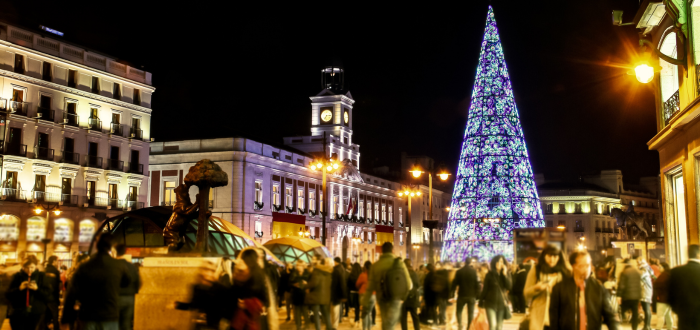
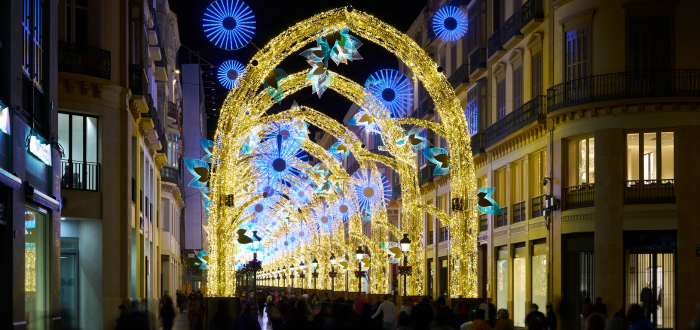
- The lighting of the lights: Cities like Madrid or Malaga transform into open-air museums with millions of LED lights that create a magical atmosphere for strolling.
- Seasonal gastronomy: You cannot say you have experienced a Spanish Christmas without trying turrón, marzipan, or the iconic Roscón de Reyes. Additionally, tapas adapt with winter flavors in what we call the “Festive Tapas Experience“.
- The 12 grapes on New Year’s Eve: One of the most famous traditions in the world. We welcome the New Year by eating one grape for each of the 12 bell strikes, usually in iconic squares filled with people.
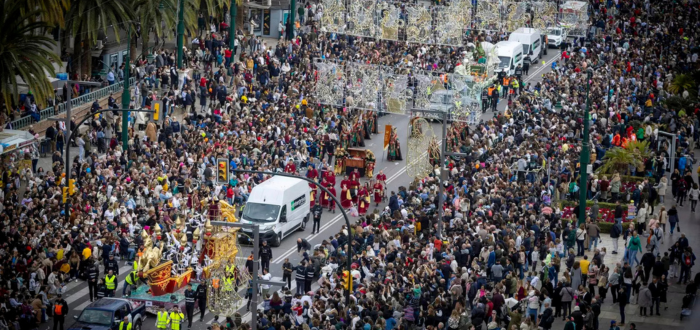
- The three Kings Parade (Cabalgata de Reyes): On January 5th, the streets fill with floats and sweets to welcome the Three Wise Men, a tradition that keeps the magic alive for children and adults alike. If you’d like to dive deeper into this holiday and learn all the details about how the following day is celebrated, we invite you to take a look at our specialized article: 👉 All about Three Kings’ Day and its traditions.
Iconic destinations: Where to live your Christmas in Spain?
If you are thinking about next year, choosing the destination is key. Each city brings a different nuance to Spanish Christmas traditions:
- Madrid: The festive epicenter. You can stroll through the Plaza Mayor market and see the giant tree at Puerta del Sol.
- Barcelona: Famous for its craft markets and unique traditions like the “Fira de Santa Llúcia.” It is an ideal destination for those seeking culture and the avant-garde.
- Malaga: Offers one of the most famous light shows in Europe on Calle Larios, combining Christmas with the Mediterranean breeze.
- Valencia: A city that experiences Christmas with a special light, ideal for enjoying the gastronomy and artisanal Nativity scenes (Belenes).
- Tenerife: Christmas in paradise? It is the perfect destination for those who want to experience Spanish traditions under the sun and in spring-like temperatures.
Learning spanish at Christmas: A different experience
Although many think winter is for staying at home, in Spain it is the ideal time to study. Why? Because culture spills out into the streets and local hospitality multiplies.
Dencanto Community partner schools, such as Enforex, design special programs intended to keep learning in motion, allowing you to discover the best spanish Christmas traditions while improving your language level.
What is a christmas immersion program like?
If you decide to plan your trip for next year, this is what you could find in destinations like Barcelona, Madrid, Malaga, Tenerife, or Valencia:
- Dynamic classes: Intensive Spanish sessions in the morning (4 lessons daily) focused on practical communication.
- Christmas culture workshops: One hour daily dedicated exclusively to getting to know our customs in depth and practicing conversation in a relaxed environment.
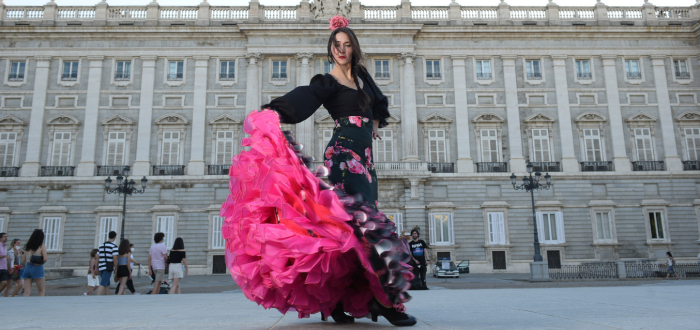
- Out-of-class activities: From tours to see the city decorations to Flamenco classes or Latin dances to experience the Spanish rhythm.
- International connection: It is the opportunity to make friends from all over the world in a festive and close-knit environment.
Plan your christmas in Spain in advance
Even though the lights are already on this year, it is never too early to start dreaming about your next adventure. Studying Spanish during “winter break” allows you to return home with a certificate of attendance and unforgettable memories of spanish christmas traditions.
From Dencanto Community, we help you find the program that best suits you in the top destinations in Spain.
Make your 2026 begin in Spain! 🎄
Don’t leave the trip of your dreams for tomorrow. If you want to know more details about prices, accommodation, and dates for next year, our team of experts is ready to help you.
Merry Christmas and a Happy New Year!
From everyone at the Dencanto Community team
Frequently asked questions about studying Spanish in Spain during Christmas
- Can I take Spanish courses during the Christmas holidays?
Yes, you can take 1 or 2-week immersion programs between December 21st and January 2nd. These courses combine intensive morning lessons with conversation workshops and Christmas cultural activities in the afternoon.
- What traditions does the Christmas cultural program include?
The program allows you to experience Spanish Christmas traditions through the "Twinkling City Tour" to see the lights, turrón and roscón tastings, and a festive tapas experience. Flamenco or Latin rhythm classes are also included.
- What happens with classes on December 25th and January 1st?
As these are national holidays, classes are not held on those days. However, to fulfill the academic program, the class hours are made up during the same week (usually starting at 8:00 AM).
- What are the best destinations to study Spanish in December?
The most popular destinations with active programs are Madrid, Barcelona, Malaga, Valencia, and Tenerife. Each city offers a unique atmosphere, from the grand lighting of the capital to Christmas under the sun in the Canary Islands.
- What level of Spanish do I need to sign up for the Christmas course?
No specific level is required, as all levels are welcome. Groups are small and dynamic, with a practical focus so that any student can enjoy the traditions while improving their fluency.