✦ HALLOWEEN EDITION ✦
DENCANTO COMMUNITY · TRADITIONS AND CULTURE
Halloween in Spain: traditions, sweets and autumn celebrations
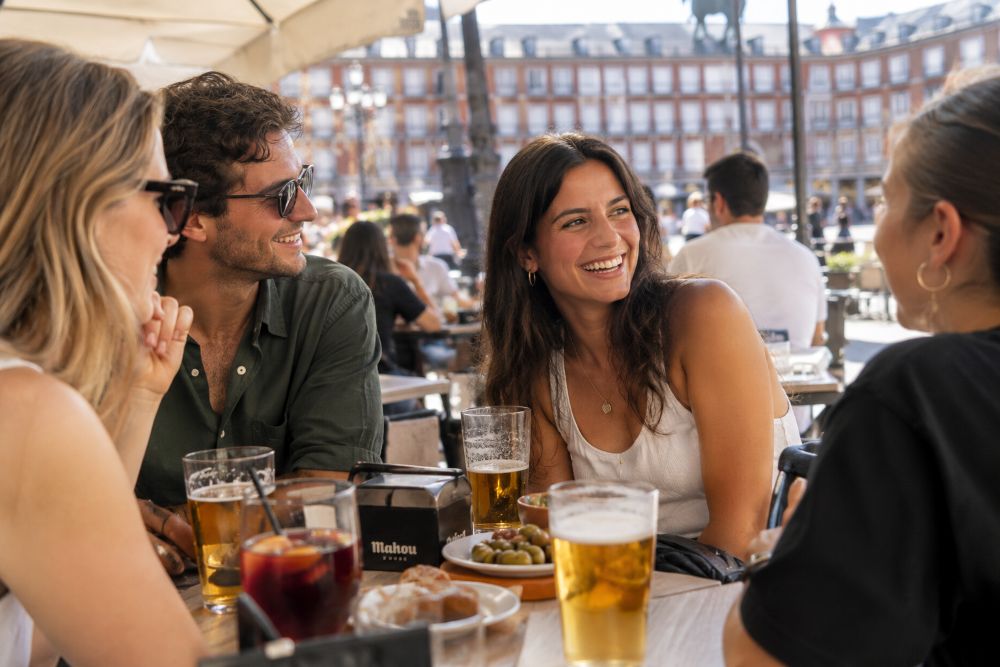
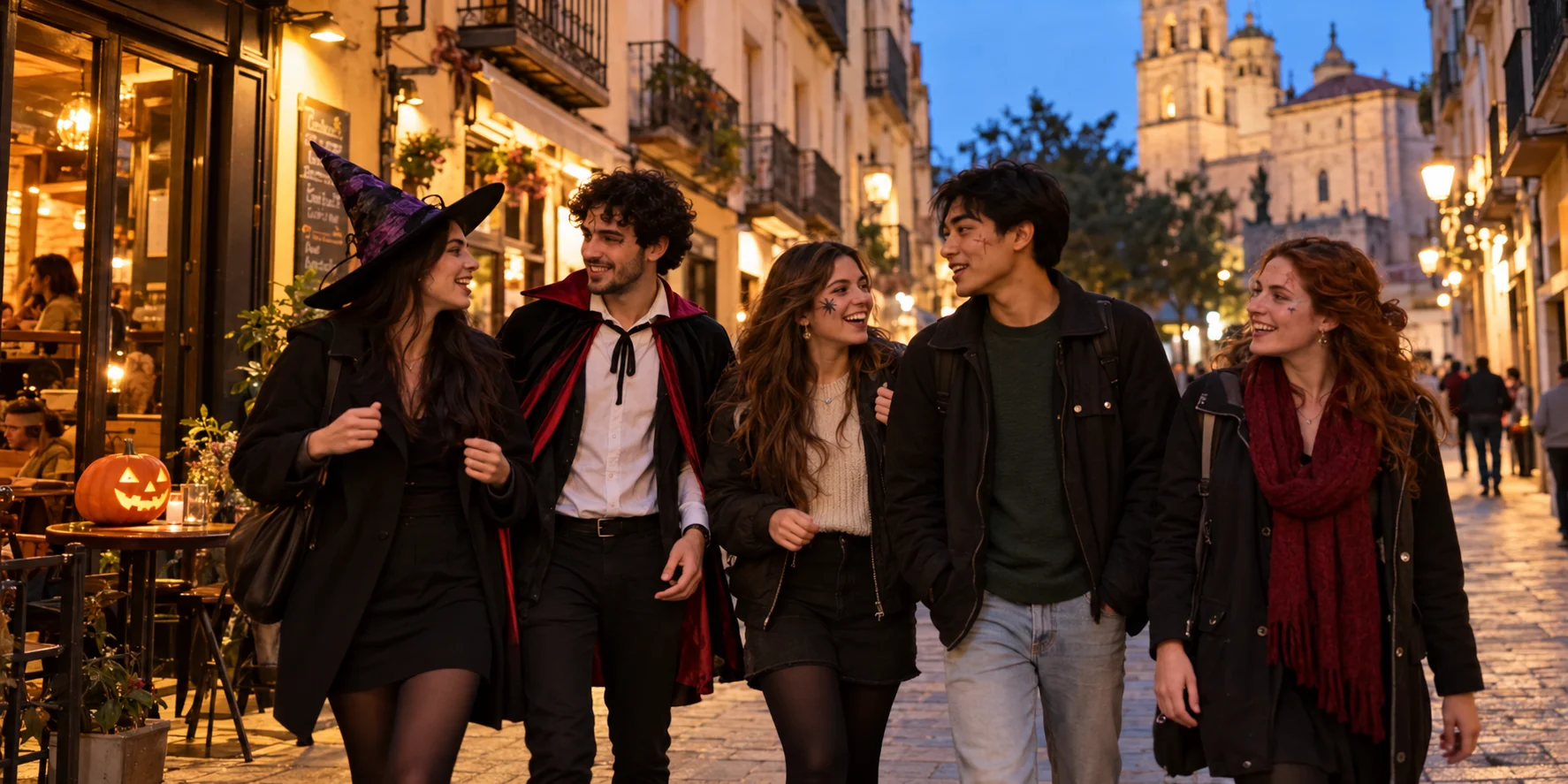
On 31 October, pumpkins, costumes and Halloween parties fill the streets of Spain. However, this celebration coexists with much older traditions that form part of Spanish culture: All Saints’ Day and All Souls’ Day.
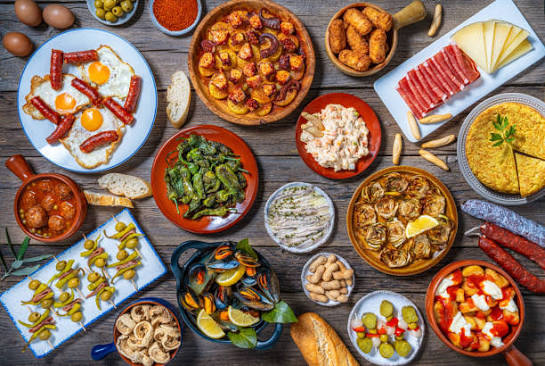
During these days, each region combines its own customs, family gatherings, traditional sweets and legends passed down from generation to generation. From Catalan panellets to the Night of the Finaos in the Canary Islands, autumn offers an opportunity to discover a different side of Spain.
If you are learning Spanish, getting to know these celebrations will also help you better understand local customs and bring you closer to the country’s culture. You can discover all our Spanish courses in Spain and start your own experience.
Traditions, sweets and autumn celebrations
01 / KEY DATES
When is Halloween celebrated in Spain?
Although Halloween has its origins in ancient Celtic traditions and became internationally popular through Anglo-Saxon culture, today it is very present in Spain. These are the three key dates:
| Date | Celebration | What is done |
|---|---|---|
| 31 October | Halloween | Costume parties, events in entertainment venues, haunted house tours and children’s activities are organised. In some neighbourhoods, children knock on doors to ask for sweets with the famous “trick or treat”. |
| 1 November | All Saints’ Day | It is a national public holiday and a day traditionally dedicated to remembering loved ones who have died. Many families visit cemeteries to bring flowers. |
| 2 November | All Souls’ Day | It is a date linked to the memory of the deceased and to religious tradition. Whether it is a public holiday depends on the calendar of each year and autonomous community. |
Thus, while Halloween is mainly associated with costumes and entertainment, the first days of November retain an important family and cultural significance.
If you want to experience these dates first-hand while improving your level, you can consult our intensive Spanish courses and our semi-intensive Spanish courses.
02 / REGIONAL TRADITIONS
Halloween and autumn traditions in the different regions
Each territory preserves its own customs for celebrating these days. Some coexist with modern Halloween; others retain a more traditional character. Discovering them during your stay allows you to get to know the place where you study better and find new topics of conversation.
Catalonia, Balearic Islands and Valencian Community: autumn flavours
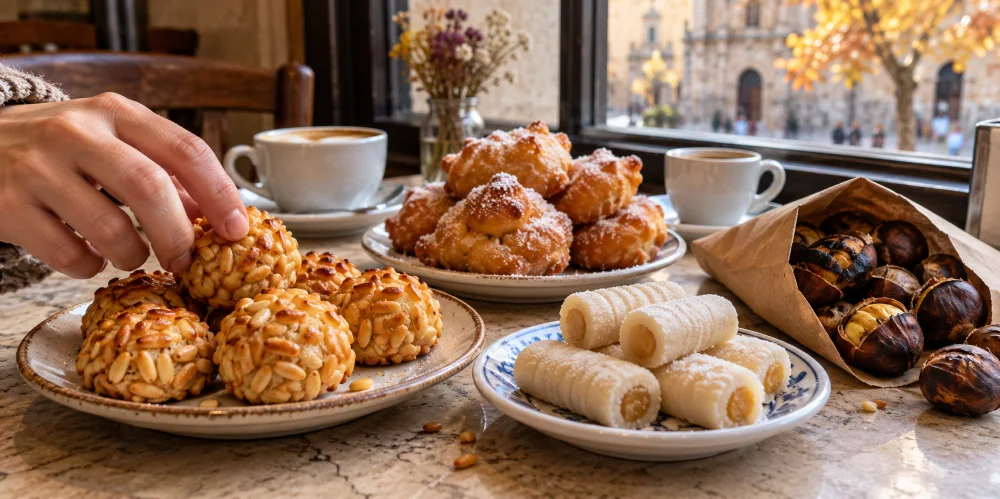
If you decide to learn Spanish in Barcelona, autumn is an occasion to discover the Castanyada. Roasted chestnuts, sweet potatoes and panellets star in this Catalan tradition, which invites you to discover local culture through its flavours.
In the Balearic Islands, bunyols and rosarios azucarados, sweets linked to these dates, also stand out. If your destination is Valencia, you can take the opportunity to ask in pastry shops about All Saints’ Day specialities and discover the differences between regions.
Andalusia: the Tosantos of Cádiz
The Tosantos show one of the most original sides of Cádiz: its markets fill with creativity, humour and satirical scenes made with products from the stalls.
For those who choose to study Spanish in Cádiz, exploring them brings you closer to the wit of Cádiz. Asking what a scene represents or trying to understand a play on words can become a small lesson in language and culture.
Galicia and Asturias: Samain and Amagüestu
In Galicia, Samain is linked to the change of season and the memory of the deceased. Carved, illuminated pumpkins are part of some celebrations. During a Spanish course in Santiago de Compostela, you can take advantage of these dates to ask about Galician traditions and the stories that accompany them.
In Asturias, Amagüestu brings family and friends together around roasted chestnuts and sweet cider. It is an autumn celebration where sharing a table also means sharing conversations.
Canary Islands: the Night of the Finaos
The Night of the Finaos is a Canarian tradition dedicated to remembering the deceased. Family gatherings, chestnuts, nuts and stories about ancestors have been part of this custom.
If you are considering learning Spanish in Tenerife, discovering these stories will reveal a dimension of the islands that goes beyond the landscape: the memory of their families and the ways they pass it on.
Castile and León: Don Juan Tenorio
The performance of Don Juan Tenorio, by José Zorrilla, is linked to the dates of All Saints’ Day and All Souls’ Day. Its romantic and supernatural atmosphere makes the play a way to approach Spanish literature during these days.
If you choose to study Spanish in Salamanca, you can check the city’s cultural programme and look for theatre performances or readings. Listening to a play, commenting on its characters and discovering new expressions allows you to continue learning outside the classroom.
03 / LEGENDS AND MYSTERY
Spain: legends, mystery and culture
In addition to its traditional festivities, Spain has places associated with legends, witchcraft and mysterious stories. Soportújar, in Granada, stands out for its witch theme; Zugarramurdi, in Navarre, is associated with the history of witchcraft; and Belchite, in Zaragoza, is known for the stories linked to its old village.
These destinations allow you to explore tales and historical episodes that form part of the Spanish popular imagination.
If you are interested in deepening your language and culture while touring these regions, you can also consult our private Spanish classes.
04 / DISCOVER SPAIN
Discover Spain through its traditions
Halloween and All Saints’ Day celebrations show that Spanish culture goes far beyond costume parties. Each region preserves its own flavours, stories and customs that help to understand its identity.
If you are learning Spanish, these traditions are an excellent opportunity to practise the language, talk to local people and discover cultural expressions that are difficult to learn from a book alone. You can explore all our Spanish courses for foreigners and choose the one that best suits your goals.
With Dencanto Community you can find Spanish courses in Spain and live an educational experience that combines language learning with discovering Spanish culture. If you are looking for a more demanding pace, take a look at our super-intensive Spanish courses.
YOUR NEXT STEP
Experience autumn traditions while learning Spanish
Before booking, find out your Spanish level with our free online test and discover the course that best suits you.
05 / FREQUENTLY ASKED QUESTIONS
Frequently asked questions about Halloween in Spain
What is the difference between Halloween and All Saints’ Day?
Halloween is celebrated on the night of 31 October with costumes, parties and themed activities. All Saints’ Day, on 1 November, is a national public holiday in Spain dedicated to remembering the deceased. Many families visit cemeteries, bring flowers to their loved ones and keep family traditions alive.
How is Halloween celebrated in Spain?
Halloween is celebrated with costume parties, scary decorations, haunted houses and children’s activities. It also coexists with Spanish traditions such as the Catalan Castanyada and the Galician Samain.
When did people start celebrating Halloween in Spain?
Halloween became popular in Spain especially in the late 20th and early 21st centuries, driven by the influence of Anglo-Saxon culture, cinema and commercial celebrations.
What do people do on 31 October in Spain?
On the night of 31 October, themed parties are organised, children go out to ask for sweets with “trick or treat” and many people take part in horror-related activities.
What is the true origin of Halloween?
Halloween has its roots in Samhain, an ancient Celtic festival that marked the end of the harvest and the beginning of the dark season. Over time, it blended with Christian traditions and evolved into today’s celebration.
Which came first, Halloween or the Day of the Dead?
Halloween has roots in ancient Celtic traditions that predate the modern celebration. Mexico’s Day of the Dead comes from a combination of pre-Hispanic Indigenous customs and Catholic traditions. The two celebrations have different histories and are connected with remembering the dead.
06 / LEARN SPANISH
A night of fright… and an opportunity to learn Spanish
Halloween is much more than pumpkins, costumes and horror films. In Spain, these dates allow you to discover regional traditions, taste typical sweets and learn expressions that are part of everyday life.
If you are learning Spanish, take the opportunity to step away from your usual exercises, talk to other people and discover how this celebration is experienced in different parts of the country.
Because learning a language also means understanding the culture around it. And sometimes, the best way to learn Spanish is to have a frighteningly good time! If you want to take the step, take a look at our Spanish courses and schools in Spain and discover the Dencanto Community experience.