
If you are thinking about learning Spanish, one of the first questions you will probably ask yourself is: how long does it really take to learn Spanish?
The honest answer is that there is no fixed number of weeks or months. Your starting level, how often you study, how much Spanish you listen to and speak, and the way you learn can all make a significant difference.
For English speakers, Spanish is generally considered one of the more accessible major languages to learn. Some commonly cited estimates suggest that around 600–750 hours of study may be needed to reach a strong conversational level, although reaching an advanced or professional level can take considerably longer.
But hours alone do not tell the whole story.
Table of Contents
1. How Long Does It Take to Reach Each Level of Spanish?
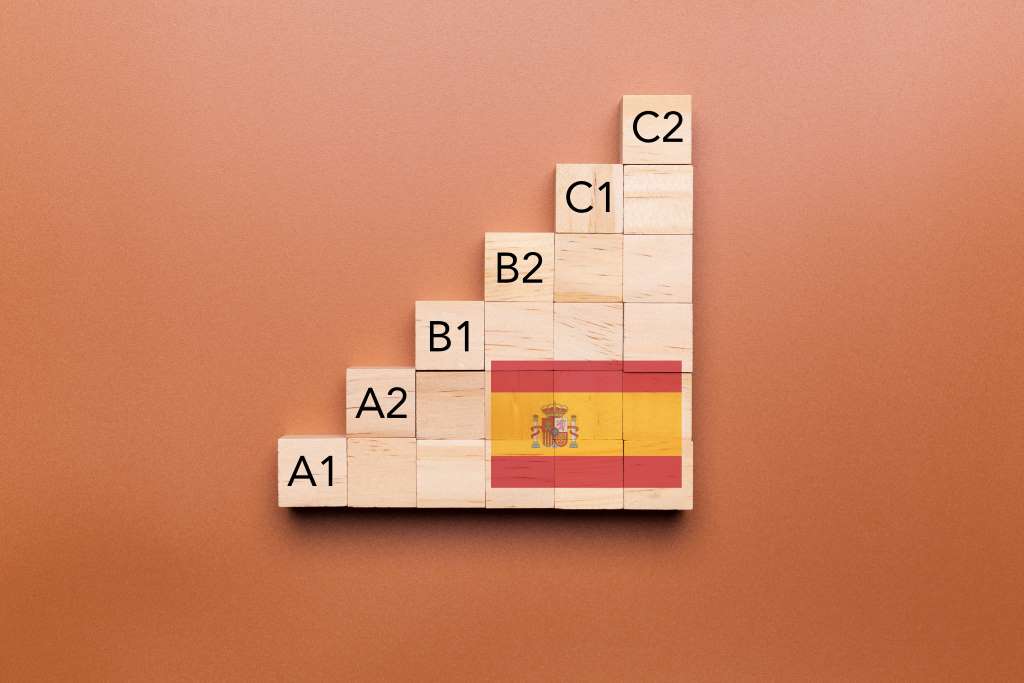
The Common European Framework of Reference for Languages (CEFR) provides a useful way to measure progress, from beginner level A1 to advanced level C2.
There is no universal number of hours that guarantees reaching a particular level, but these estimates can help you get a realistic idea of what the learning journey might look like.
| Spanish level | What you can generally do | Approximate learning hours* |
|---|---|---|
| A1 | Introduce yourself and handle basic situations | 70–80 |
| A2 | Talk about familiar topics and everyday activities | 150–180 |
| B1 | Hold independent conversations about familiar subjects | 300–360 |
| B2 | Communicate comfortably in most everyday situations | 540–620 |
| C1 | Express yourself fluently and understand complex language | 700+ |
*These figures are indicative estimates, not guaranteed timelines. Previous experience with other languages, study intensity and regular exposure to Spanish can all speed up or slow down your progress.
B1: An Important Turning Point
For many learners, B1 is an important turning point. At this level, you may still make mistakes, but you can talk about your experiences, express your opinions, make plans and handle everyday situations without constantly relying on English.
2. What Really Determines How Quickly You Learn Spanish?
The number of hours you study matters, but what you do during those hours matters just as much.
Someone who studies Spanish for 30 minutes every day can develop a much stronger habit than someone who studies for several hours only once a week. Regular exposure makes it easier to remember vocabulary and recognise grammatical structures more naturally.
CONSISTENCY
Study regularly
Regular exposure makes it easier to remember vocabulary and recognise structures more naturally.
SPEAKING
Speak from the start
Understanding Spanish and being able to respond in real time are different skills.
EXPERIENCE
Your previous languages help
Speaking French, Italian or Portuguese can help you recognise similarities in vocabulary and grammar.
Speaking is also essential. Many learners understand considerably more Spanish than they are able to produce. Listening to a conversation is one skill; having to respond to a native speaker in real time is another.
That is why speaking from the beginning is so important. You do not need to wait until your Spanish is perfect. Making mistakes is part of learning how to communicate.
Your previous language experience can help too. If you already speak another Romance language, such as French, Italian or Portuguese, you may recognise similarities in vocabulary and grammar.
And then there is perhaps one of the most important factors of all: your environment.

3. Is It Faster to Learn Spanish in Spain?
Very possibly.
Studying Spanish in Spain has one major advantage that is difficult to recreate from another country: you can make the language part of your everyday life. Your class gives you the structure, vocabulary and tools you need to progress, but once you leave the school, you have an entire environment in which to put them into practice.
Spanish continues when you leave the classroom
💬 Talking to classmates
🛒 Doing your shopping
📍 Asking for directions
👂 Listening to locals
Ordering a coffee, talking to classmates, doing your shopping, asking for directions or simply listening to locals speak are all small situations that turn what you have learned into something real.
That is why coming to Spain is not simply about studying Spanish for a few hours a day; it is about having the opportunity to live the language. The more you use Spanish outside the classroom, the more natural it becomes to understand and express yourself in real-life situations.
Immersion does not mean you will suddenly speak perfect Spanish, but it can help you build confidence and make more consistent progress.
What Does Fluency Really Mean?
When we talk about fluency, it is important to remember that it does not necessarily mean speaking like a native. A B1 student can hold conversations about their life and manage a trip in Spain, while someone at B2 level can express opinions more confidently and participate in more complex conversations.
Fluency is a process, not a specific moment when you suddenly “know Spanish”.
If you want to combine learning, travel and an authentic experience in Spain, Dencanto can help you find the course that best suits you, from general and intensive programmes to options designed to prepare for official exams. You can explore different Spanish courses in Spain and choose according to your level, goals, available time and the city you would like to discover.
YOUR EXPERIENCE IN SPAIN
Find the programme that fits you
Choose according to your level, goals, duration and destination, and turn Spanish learning into a complete experience.
4. Frequently Asked Questions
Can I learn Spanish in three months?
You can make significant progress in three months, especially if you combine intensive study with daily practice. The level you reach will depend on your starting point and how much Spanish you use.
Is Spanish difficult for English speakers?
Spanish is generally considered relatively accessible for English speakers, although pronunciation, verb conjugations and understanding fast spoken Spanish can take time to master.
Can I learn Spanish in Spain from scratch?
Absolutely. Spanish schools offer courses for complete beginners, including programmes starting at A1.
Is it worth going to Spain for just two weeks?
Yes. An intensive course can help you build a foundation, gain confidence and discover how to continue progressing.
What is the fastest way to learn Spanish?
For many learners, a combination of structured lessons, regular speaking and listening practice, and immersion in a Spanish-speaking environment is one of the most effective ways to progress.
Because learning Spanish can be much more than studying a language: it can be an opportunity to travel, meet new people, discover Spain and return home speaking a little more Spanish than when you arrived.