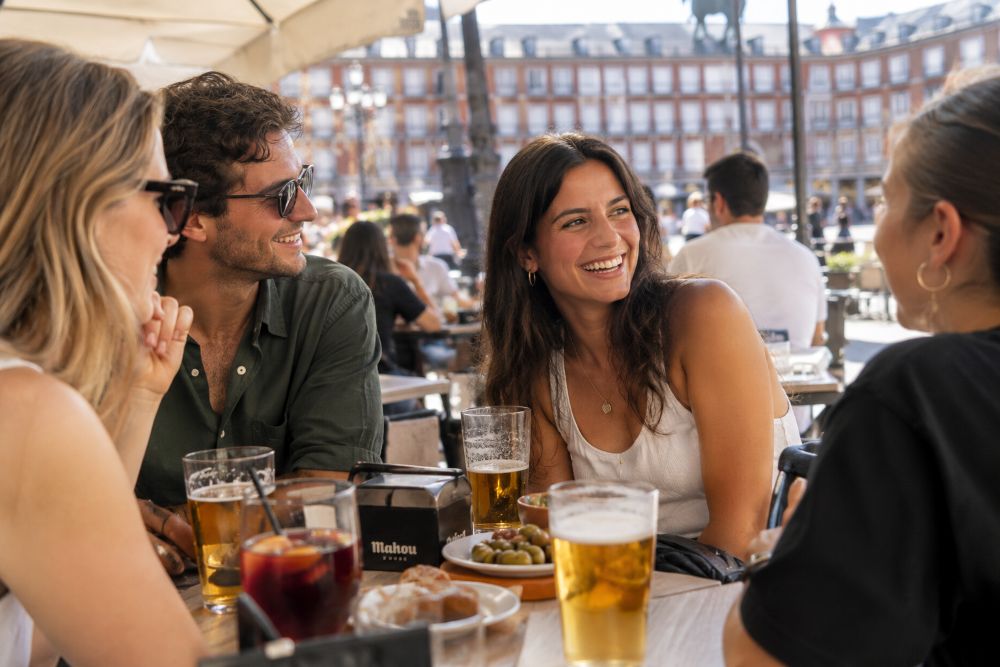
We know that Spain is known throughout the world for its rich culture, its gastronomy, its landscapes… But it is also known for its popular festivals, so typical and so different from one another that they make this country unique.
Spain’s different popular festivals are a major draw for Spaniards themselves and for tourists alike—a way to experience and understand how each region of the country celebrates.
The Sanfermines
Perhaps it is the most widely recognized Spanish festival in the world. This festival in Pamplona is held in honor of San Fermín and brings together everything from religious observance to the most popular traditions that unite the whole family.
Everything takes place, from processions, songs, and the chupinazo rocket launch to the festival’s best-known event: the encierro, or bull run. It is a route of approximately 900 meters where the brave who join in run ahead of 6 bulls, ending at the city’s bullring.
You can enjoy this festival from July 6 to 14.
Las Fallas
Las Fallas, celebrated in Valencia, is another classic among Spain’s popular festivals. Many people (almost a million each year), both from Spain and abroad, gather to watch “the city burn.” One of the most striking moments of this festival is the cremà de los ninots.
It is held from March 14 to 19 in honor of San José, patron saint of carpenters, and consists of the fact that throughout the entire year sculptures are created representing the city, the country, or important events, which are then burned in the middle of the city streets. As legend has it, San José made purifying bonfires with the remains of the sculptures left in his workshop, a practice that has evolved into the Fallas we know today.
The Feria de Abril
The Feria de Abril, held in the second half of April in Seville, is another of Spain’s eagerly awaited popular festivals. Every year it brings together thousands of people from around the world.
What began as a traders’ fair has today become a week-long celebration of life and Sevillian traditions.
Women dress in their best flamenco dresses and dance sevillanas day and night. The party never stops in Seville!
La Tomatina
In the Valencian town of Buñol, La Tomatina is held every year, one of the most spectacular Spanish popular festivals to see and experience.
It is held on the last Wednesday of August and consists of throwing kilos and kilos of tomatoes at one another. Yes, that’s exactly what you read.
This tradition began after a fight among some young people at the town’s giants and big-heads parade, when one of them, after being knocked to the ground by another, had no other response than to grab the vegetables from the nearest stall and throw them at the other. The following year the vegetable war was repeated, this time voluntarily. That is how the tradition has survived to the present day.
Close to 20,000 people and more than 120 tons of tomatoes take over the town streets in a most peculiar battle. We recommend wearing old clothes and diving goggles—you’re going to need them.
The Descent of the Sella
This popular festival is dedicated to the most sporty and consists of descending the Ribadesella River by canoe. A mix of competition, celebration, music, and many activities usually take place on the first Saturday of August.
This festival has been held since 1930 and is one of the most important canoeing events in the world.
Moors and Christians Festivals
During April 22, 23, and 24, the popular Moors and Christians festival is held in Alcoy, Alicante,. The intention is to relive history from centuries ago, when armies from both sides march through the city to the rhythm of music and reenact typical scenes from the period.
This festival commemorates the Christian reconquest of the lands occupied by the Arabs and has been held since 1821. Without a doubt, it is a very peculiar and fun way to learn about part of Spain’s history.
Cherry Blossom Festival
For 70 years, the Cherry Blossom Festival has been held in the Valle de Jerte, Cáceres. This festival, celebrated between late March and early April, has been declared of National Tourist Interest. In fact, the beauty of the cherry trees in bloom can leave anyone seeing this landscape spectacle for the first time utterly captivated.
This festival offers culture-, gastronomy-, and tourism-related activities that you cannot miss.
Pilgrimage of the Virgen del Rocío
In the town of Almonte, Huelva, the Pilgrimage of the Virgen del Rocío is celebrated, the most famous pilgrimage in all of Spain. It begins on Pentecost weekend (May), a pilgrimage in which the faithful follow and accompany the Virgin to her temple.
This festival began to be held in 1653 following the naming of the Virgen del Rocío as patron saint of the town. It is an Andalusian celebration where you can see tradition and devotion. You cannot miss it.
Santa Cruz de Tenerife Carnival
The Tenerife carnival is the second best in the world. It is held three weeks after Easter and features murgas, bands, queens, music, and costumes everywhere. The island becomes pure celebration and fun.
There is evidence that the carnival has been held since the first European settlements, around 1605.
Corpus Christi
In the province of Granada, Corpus Christi is celebrated, a celebration that served the Catholic Monarchs to Christianize the Muslim population that lived there before the conquest.
It is celebrated between May and June, after Easter, and coincides with the annual fair. It thus becomes one of the city’s best-known festivities.
How many of these festivals have you visited? There are many more, such as the New Year’s Eve celebrations in Spain.
At Dencanto Community, we invite you to discover all the Spanish festivals you have yet to experience and to revisit the ones you already know. Enjoy life!