
DENCANTO COMMUNITY · GROUP PROGRAMMES
Organising a language trip to Spain for a group is about much more than booking a Spanish course. You have to choose the destination, find the right school, arrange accommodation, plan activities and excursions, and work out a budget that fits the group’s needs.
In this guide you’ll find the main things schools, universities, educational agencies and group organisers need to consider when preparing a language immersion programme in Spain.
01 / THE FIVE PILLARS
What should a language immersion programme include?
A good programme combines learning and experience. Before choosing a proposal, it’s worth weighing up five elements:
01
Destination
Based on the group’s age, interests and goals.
02
Spanish course
Level, number of hours and teaching method.
03
Accommodation
Host families, residences or other options.
04
Activities
Cultural visits, excursions and experiences in Spanish.
05
Logistics
Transfers, meals, chaperones and other services.
For organised groups, it’s also important that all these elements can be coordinated coherently. Programmes for organised groups let you design the experience around the participants’ specific needs.
02 / THE DESTINATION
Choosing the destination for your group
Spain offers very different destinations for organising school language trips.
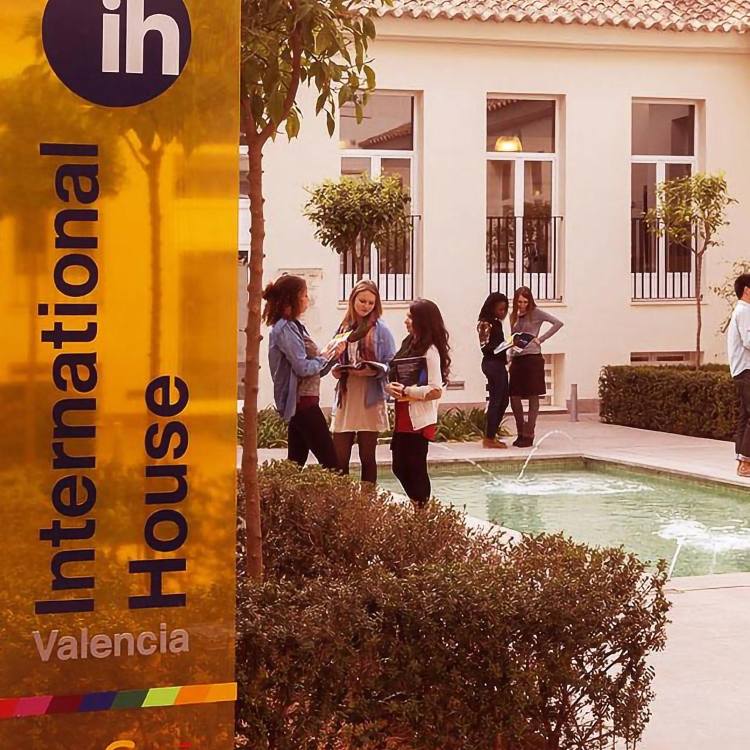
Salamanca is a choice closely tied to university tradition and Spanish learning, while Granada combines culture, heritage and student life. Málaga and Valencia let you add outdoor activities and Mediterranean experiences.
Madrid and Barcelona, meanwhile, offer huge cultural possibilities, international connections and an urban, multicultural environment.
The choice will depend on the group’s profile, the length of stay, the budget and the activities you want to include. There’s no single destination that suits every group.
Want to see all the available destinations? Check out the main Spanish courses in Spain page.
03 / THE COURSE
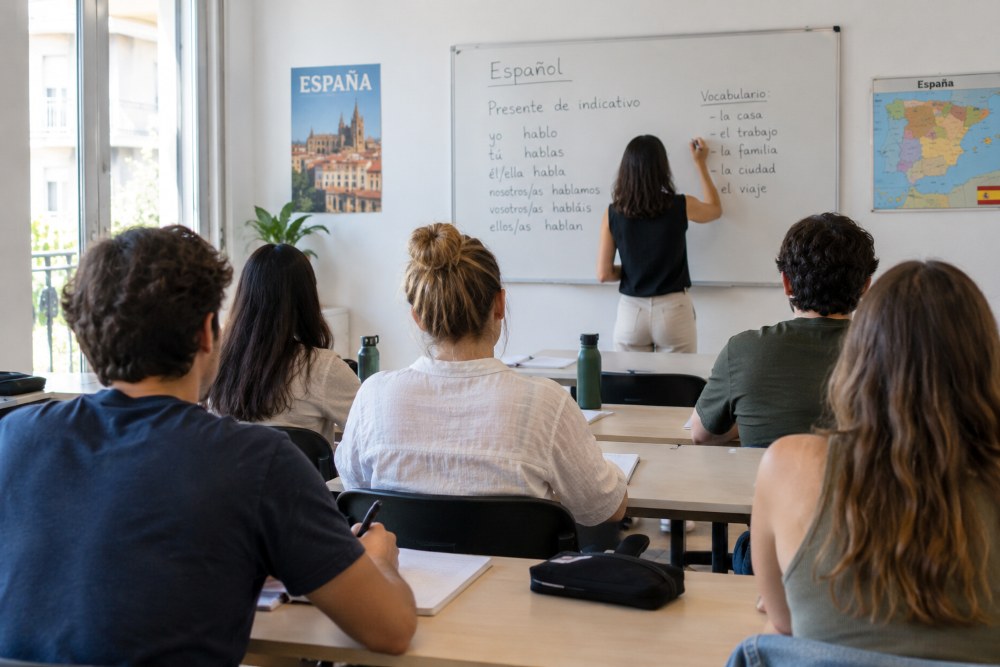
Choosing the Spanish course
The course should match both the participants’ level and the educational goals of the trip. Before booking, it’s worth checking:
- Number of hours per week
- Students’ level
- Class size
- Age of participants
- The school’s experience with groups
- Complementary activities
- Flexibility to adapt the programme
Intensive Spanish courses are a popular choice because they let you concentrate classes in the morning and keep part of the afternoon free for cultural activities, excursions or free time.
Beyond traditional formats, there are thematic Spanish courses that combine language learning with interests such as art, sport, gastronomy, flamenco or Spanish culture. For certain university groups, it can also make sense to work on content related to DELE, SIELE or Hispanic studies.
04 / ACCOMMODATION
Choosing accommodation
Accommodation is an essential part of the immersion experience.
Host families let students practise Spanish outside the classroom and get a close-up view of everyday life and local customs. Student residences can make it easier to organise school groups, especially when you want to keep participants together.
For certain adult or university groups, shared apartments can also be worth looking into.
The choice should take into account students’ age and independence, the budget and the programme’s goals.
05 / THE BUDGET
How much does a language trip to Spain cost?
The price depends on the city, the length of stay, the number of participants, the course, accommodation, activities and included services. That’s why, for groups, it’s best to request a personalised quote.
As a starting reference:
These amounts are indicative and do not constitute a fixed rate. The final quote should be calculated based on dates, number of students, destination, accommodation and contracted services.
When requesting a proposal, it’s worth checking whether it includes the course, materials, accommodation, meals, activities, excursions, transfers and conditions for teachers or chaperones.
06 / THE ACTIVITIES
Adding immersion activities
Classes are only one part of a language experience. Activities let students use Spanish in real situations and get to know the destination better.
You can organise cultural visits, museum trips, cooking workshops, sports activities, language exchanges, excursions or food-related experiences.
For groups especially interested in Spanish culture, history and heritage, Spanish and Hispanic studies programmes can complement classes with cultural and academic content.
07 / ORGANISATION
How to organise the programme step by step
For schools, agencies and other organisers, the process can be summed up in six steps:
01
Define the group
Number of participants, ages and level.
02
Set dates and duration
Decide when and for how long they’ll travel.
03
Set the budget
Decide which services should be included.
04
Select destination, course and accommodation
Based on the group’s needs.
05
Design the activities
Add cultural experiences and excursions.
06
Request a proposal
Check all services and conditions before booking.
08 / DENCANTO COMMUNITY
How can Dencanto help you?
Organising a programme from scratch can mean contacting different schools, comparing accommodation options and coordinating activities.
At Dencanto Community we help design Spanish learning experiences in Spain tailored to each group. We work with different schools and destinations to find combinations of course, accommodation and experiences that meet the organiser’s needs.
To get started, we need to know the number of participants, ages, Spanish level, approximate dates, duration, preferred destination and the type of experience you’re looking for.
YOUR NEXT STEP
Are you organising a language trip to Spain?
Tell us about your group, when you want to travel and what experience you’re looking for. We’ll help you find a proposal for Spanish, accommodation and activities tailored to your needs.
09 / FREQUENTLY ASKED QUESTIONS
Frequently asked questions
How much does it cost to organise a language trip to Spain for a group?
The price depends on several factors: number of students, programme length, city, type of course, accommodation, activities and additional services such as transfers or excursions. That’s why there’s no single rate for every group. The most useful approach is to define your trip’s needs first and then request a tailored quote. This way, the organiser knows the real cost of the programme from the start and can avoid unexpected expenses.
How can I organise a language trip without coordinating everything separately?
Organising a language trip means coordinating the school, classes, accommodation, activities, transfers, schedules and the group’s specific needs. To avoid handling each service separately, you can work with a single point of contact who helps centralise the programme. Dencanto can help you find and organise an experience that combines a Spanish course, accommodation and activities, tailored to the group’s characteristics and simplifying the process for the organiser.
What happens if students have different Spanish levels?
Not all students have to start at the same level to take part in an immersion programme. Before classes begin, each participant’s level can be assessed and appropriate learning groups can be arranged. This lets each student work on content suited to their knowledge and make the most of their stay. It’s also important to choose a school with experience working with groups and the ability to adapt its academic organisation to different levels.
What does a language immersion programme in Spain actually include?
An immersion programme can include much more than Spanish classes. Depending on the group’s goals, it can combine the course, accommodation, cultural activities, excursions, workshops, food experiences, visits and other logistics services. The key is to design the programme around what the group needs — its age, length of stay and educational goals — making the included services and additional costs clear from the start.
How do I choose the right city and accommodation for a group of students?
The choice depends on factors such as participants’ ages, trip length, budget, educational goals and the type of experience you’re after. Cities like Salamanca, Granada, Málaga, Valencia, Madrid or Barcelona offer different contexts for learning Spanish and experiencing local culture. As for accommodation, the most common options are host families, residences and shared apartments. For student groups, it’s important to weigh not only the price but also the location, travel times, group dynamics and ease of supervision.