FOOD & SPANISH
If you’re learning Spanish in Spain, there’s one part of the experience that never shows up in a textbook: eating the way locals do.
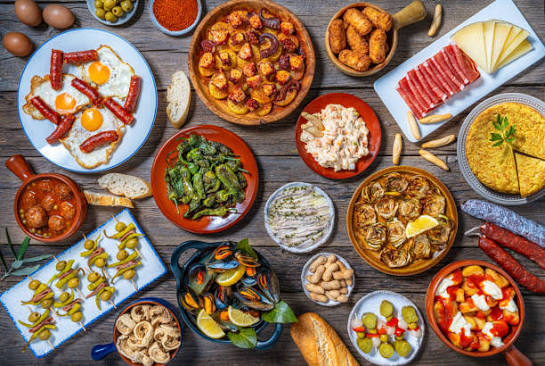
Spain has an enormous food culture that changes dramatically from region to region. From a paella by the Mediterranean to tapas after class, trying local food is one of the best ways to discover new cities, customs, and flavors.
And there’s more: while you eat, you can also learn Spanish. A restaurant menu can teach you new words, a chat with the waiter can help you practice, and sharing a meal with other students can turn into a real language class out on the street.
So get your appetite ready. Here are 7 iconic dishes from Spanish cuisine that you have to try during your stay.
01 / ICONIC DISH
Paella: the art of sharing around a table
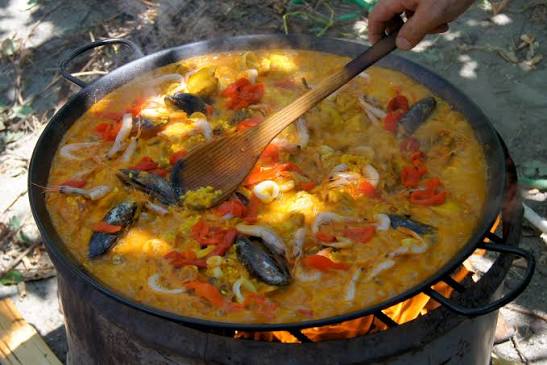
We start with one of the most famous Spanish dishes in the world. Paella is so much more than rice; depending on the region, it’s made with vegetables, chicken, rabbit, or fresh seafood. Its undisputed birthplace is the Valencia region, so sitting by the sea to savor an authentic traditional recipe while you study in Valencia is an unmissable experience.
Words you can learn: arroz (rice), marisco (seafood), verduras (vegetables), caldo (broth), sofrito, compartir (to share).
02 / ICONIC DISH
Tortilla de patatas: the great national debate
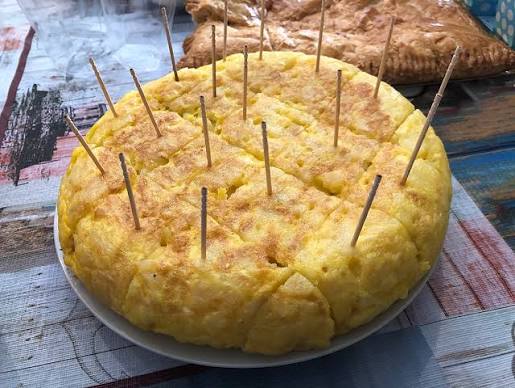
Potatoes, eggs and, for many, onion. That’s all you need to make one of the great pillars of Spanish cooking. The tortilla shows up on every bar counter in the country, whether as a quick pincho or as a main dish. If you decide to do your immersion in cities like Madrid or Barcelona, you’ll find that every bar claims to have the best recipe, sparking friendly debates over whether it should include onion or be left a little runny in the middle.
Words you can learn: tortilla, patata (potato), huevo (egg), cebolla (onion), pincho, cuajada (set).
03 / ICONIC DISH
Gazpacho: southern freshness in a glass
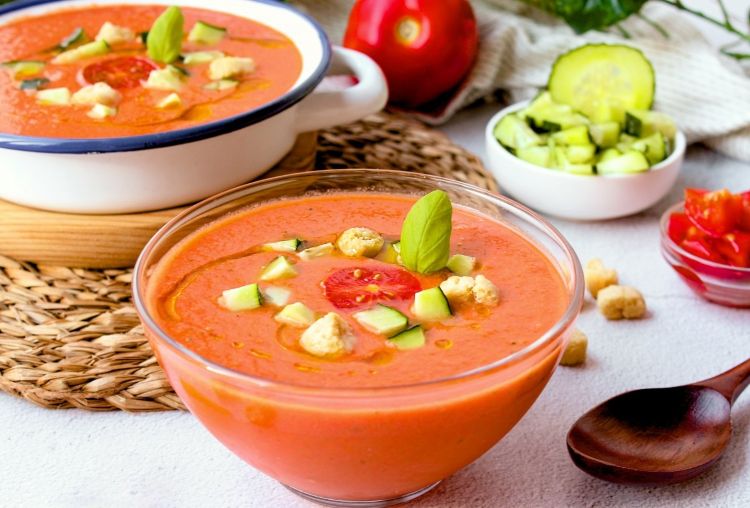
Tomato, cucumber, pepper, garlic, olive oil and a splash of vinegar. When the heat cranks up in the south of the peninsula — especially during the warm months in Andalusian cities like Seville or Málaga — gazpacho becomes the perfect ally. Ordering it on a sunny terrace is the ideal excuse to interact with the staff and pick up the secrets of a light, refreshing recipe.
Words you can learn: tomate (tomato), pepino (cucumber), pimiento (pepper), aceite (oil), vinagre (vinegar), frío (cold).
04 / ICONIC DISH
Patatas bravas: the start of every tapas crawl
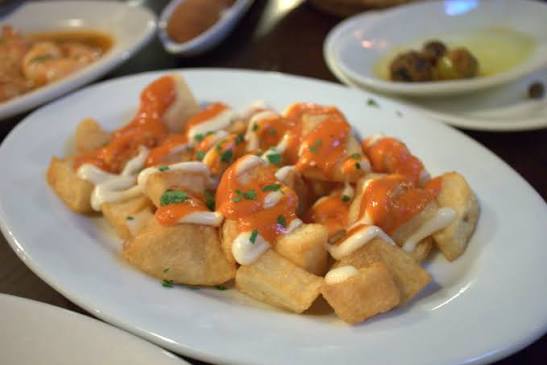
If you want to understand social life in Spain, you have to go out for tapas. And few things are as authentically Spanish as patatas bravas: diced potatoes, fried and drenched in a spicy sauce. It’s the perfect dish to order for the middle of the table after class while you practice your conversation skills with classmates from all over the world on a lively city terrace.
Words you can learn: tapa, salsa (sauce), picante (spicy), ración (portion), pedir (to order), compartir (to share).
05 / ICONIC DISH
Croquetas: a small, crispy, creamy jewel
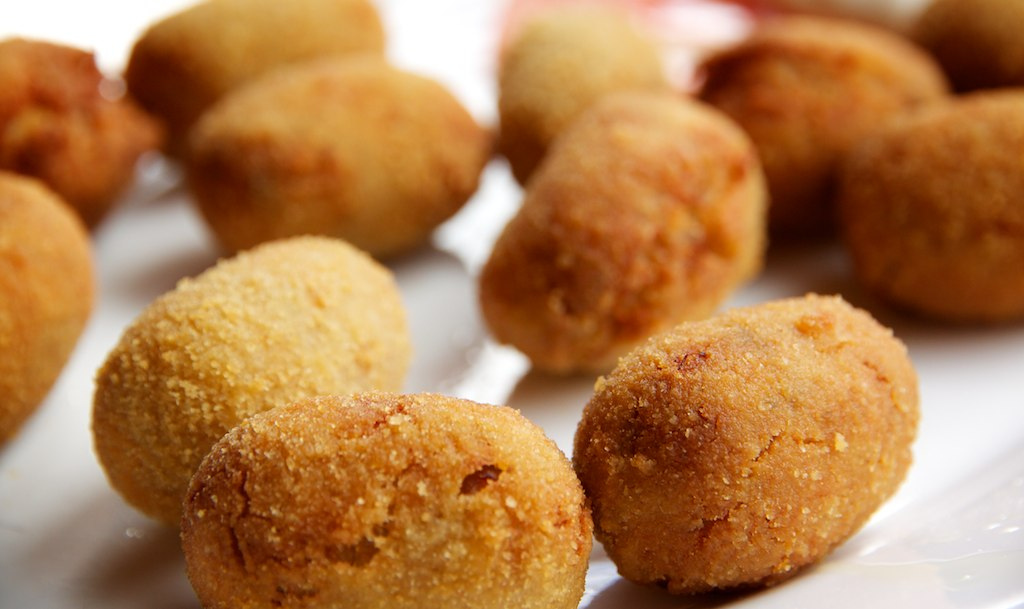
Crispy on the outside and infinitely creamy on the inside, croquetas are a true national weakness. Whether they’re made with serrano ham, mushrooms, or blue cheese, ordering a mixed plate to try different flavors is a fantastic everyday exercise to get comfortable with numbers, quantities, and personal preferences when placing your order.
Words you can learn: croqueta, crujiente (crispy), relleno (filling), jamón (ham), queso (cheese), pedir (to order).
06 / ICONIC DISH
Pulpo a la gallega: the seafaring soul of the north
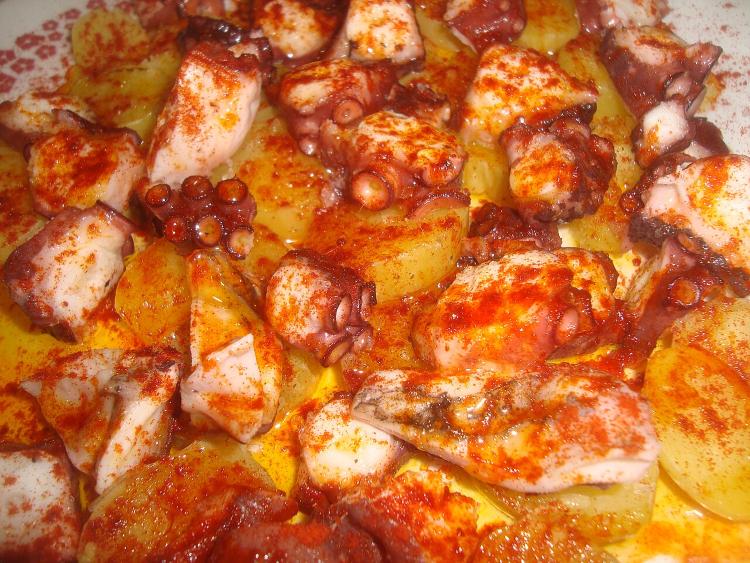
Spanish cuisine changes dramatically when you head north. Pulpo a la gallega (pulpo á feira), typical of regions like Santiago de Compostela, is boiled and served sliced on a wooden board, dressed with generous olive oil, coarse salt, and paprika. A delicacy that shows how deeply food culture is tied to every landscape.
Words you can learn: pulpo (octopus), pimentón (paprika), sal (salt), aceite de oliva (olive oil), rodaja (slice), plato (dish).
07 / ICONIC DISH
Churros with chocolate: the sweet end to any day
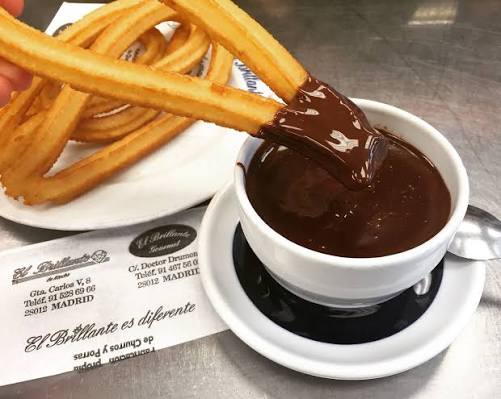
We finish with a comforting classic. Freshly made churros with a cup of thick hot chocolate are the go-to choice for breakfast or an afternoon snack. In Spain, taking a break to have a merienda isn’t about hunger — it’s about the pleasure of socializing, slowing down, and stretching out the after-meal chat in a relaxed setting that will boost your confidence with the language.
Words you can learn: churros, chocolate, desayuno (breakfast), merienda (afternoon snack), caliente (hot), dulce (sweet).
08 / BEYOND THE CLASSROOM
Eating is learning Spanish too
One of the best things about studying a language abroad is that learning doesn’t stop when you walk out of the classroom. It happens at the neighborhood café when you order a coffee in the morning, at the local market when you ask about seasonal produce, and of course, when you decode chalkboards and menus with friends.
For those who want to take this connection to the next level, at Dencanto Community we don’t just help you find the perfect course and destination for your visa or stay — we also offer specialized programs like our intensive Spanish course combined with Spanish cooking in Madrid (AIL) or food immersion experiences at various partner schools, such as Escuela Montalbán in Granada. With these options, you can combine formal grammar lessons with hands-on workshops at the stove, learning the culinary ins and outs of the country from local chefs.
Learn Spanish. Discover Spain. And start by savoring every word.
YOUR NEXT STEP
Ready to learn Spanish while tasting Spain?
Discover our intensive Spanish course combined with Spanish cooking in Madrid (AIL) and our food immersion experience at Escuela Montalbán in Granada.
09 / FREQUENTLY ASKED QUESTIONS
Frequently asked questions about food and studying in Spain
What are the most typical dishes in Spain?
Must-tries include Valencian paella, Spanish potato omelette, Andalusian gazpacho, homemade croquetas, patatas bravas, Galician octopus, and churros with chocolate — with subtle variations from region to region.
What Spanish food should I try while studying?
The best approach is to let your destination guide you. Trying local specialties like gazpacho in Seville, paella in Valencia, or octopus in the north will instantly connect you with the customs of the area.
Can I learn Spanish through food?
Absolutely! Food opens up thousands of real everyday situations that force you to practice specific vocabulary for ingredients, cooking techniques, and polite phrases so you can navigate bars, markets, and restaurants with confidence.
What basic words can I learn from food?
You’ll pick up very practical terms like crujiente (crispy), picante (spicy), relleno (filling), ración (portion), sofrito, and compartir (to share), plus key verbs and expressions for ordering dishes or talking about your food preferences.
Where can I study Spanish and enjoy its food?
You can choose from a wide range of destinations in our network, including Madrid, Barcelona, Valencia, Seville, Málaga, Salamanca, and Santiago de Compostela. At Dencanto Community we help you find the ideal program that combines language learning, visa procedures, and an unforgettable food experience.