DENCANTO COMMUNITY · COURSE GUIDE
Choosing an intensive Spanish course can seem simple until you start comparing schedules, number of classes and formats. Do you need four hours a day? Is it better to start with fewer classes? Will a super-intensive course really help you progress faster?
The answer depends on your goal, the time you have available and how much you want to dedicate to Spanish during your stay. For many students, 20 classes per week is a good balance between progressing quickly and having time to practise outside the classroom. But it isn’t the only option.
01 / YOUR SITUATION
Which Spanish course should you choose based on your situation?
There’s no perfect number of classes for everyone. The key is to find a pace you can keep up throughout your stay.
02 / INTENSIVE COURSE
The perfect balance: 20 classes per week
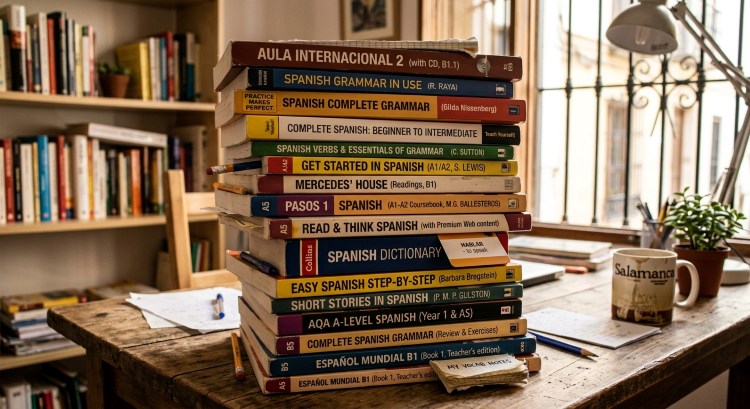
An intensive Spanish course of 20 classes per week is usually one of the most balanced options for students who want to make the most of their stay. It lets you work on grammar, vocabulary, comprehension and conversation in class while also leaving part of the day free to keep practising outside the classroom.
It’s especially interesting if you’re going to Spain for a few weeks and want to make the most of the trip.
Plus, learning doesn’t stop when class ends. Ordering a coffee, talking to other students, going on an excursion or simply finding your way around the city are all opportunities to put what you’ve learned into practice.
If you’re starting from scratch or looking for a programme adapted to students at different levels, Spanish courses in Spain let you find an option that matches your level and goals.
03 / SUPER-INTENSIVE
What if I want even more hours?
Super-intensive Spanish courses can include 25, 30 or more classes per week. They’re an option for those with a specific goal who can dedicate most of the day to learning.
However, more hours don’t always mean a better experience. If after class you’re too tired to talk, go out or practise, it may be more interesting to reduce the load and make better use of the remaining time.
04 / SEMI-INTENSIVE
When should you choose a semi-intensive course?
A semi-intensive Spanish course can be a better fit if you want to learn Spanish without spending practically the whole morning in class.
It’s an especially interesting alternative for those who want to combine learning with:
- Work or studies
- Sightseeing and excursions
- Cultural activities
- Time to get to know the city
- Self-study and practice outside the classroom
It can also be a good way to start if you don’t yet know how you’ll adapt to the learning pace.
05 / PRIVATE LESSONS
What about private lessons?
Private Spanish lessons offer greater personalisation. You can use them to work on conversation, exam preparation, pronunciation or specific areas you’re struggling with.
They can also be combined with a group course. For example, you can take an intensive course in the mornings and add a few individual lessons during the week to strengthen your weak points.

06 / BEGINNERS
Which course should you choose if you’re a beginner?
If you’re starting from scratch, you don’t necessarily need to look for the course with the most hours. What matters is that the level, methodology and pace suit you.
A student who has just started can benefit from a course structured for beginners and from opportunities to practise Spanish in everyday situations. If you’re looking for Spanish for foreigners or a course adapted to an A1 level of Spanish, it’s worth checking before booking how the groups are organised and which level corresponds to each course.
If you’re unsure, you can also start with a moderate intensity and increase the hours later.
07 / SUMMARY
So, what’s the best Spanish course?
As a general rule:
01
4–10 classes
If you’re looking for flexibility.
02
10–15 classes
If you want to learn without taking up most of the day.
03
20 classes
If you want a good balance between progress and immersion.
04
25–30 classes
If you have plenty of time and a demanding learning goal.
05
Private lessons
If you need specific or personalised attention.
Rather than choosing the course with the most hours, look for the one you can keep up and make the most of.
08 / DESTINATIONS
Find your Spanish course in Spain
Choosing where to study is just as important as choosing how many hours to study. Valencia, Alicante, Barcelona, Granada, Madrid, Málaga and Seville offer very different experiences, and prices, accommodation and pace of life can vary too.
At Dencanto Community you can find different Spanish courses and schools in Spain and get guidance to choose based on your level, dates, budget and goals.
YOUR NEXT STEP
Choose your intensive Spanish course
Before booking, find out your Spanish level with our free online test and compare the formats available based on your goals and your time.
Free level test →
See intensive courses →
See semi-intensive courses →
09 / FREQUENTLY ASKED QUESTIONS
Frequently asked questions about Spanish courses
Is an intensive Spanish course too much for a beginner?
Not necessarily. An intensive course of 20 classes per week can be suitable even if you’re starting from scratch, as long as the course is organised according to your level and you have time to rest and practise outside class. If you’re worried about feeling overwhelmed, a semi-intensive format can be a more gradual alternative.
Is an intensive or a semi-intensive course better for learning fast?
If you have several hours available per day and want to make the most of a short stay, the intensive course can help you maintain frequent contact with the language. If you need to combine classes with work, studies, sightseeing or other activities, the semi-intensive course can offer a more comfortable pace without stopping your progress.
How many Spanish classes do I need to notice progress?
It depends on your starting level, experience with other languages, study time and practice outside the classroom. As a reference, 20 classes per week offer frequent contact with Spanish, while a lighter load can work well if you complement classes with conversation, activities and self-study.
What happens if I start an intensive course and find it too difficult?
You don’t have to keep up a pace you can’t make the most of. If you feel too tired or don’t have enough time to absorb what you’ve learned, you can consider a format with fewer hours, such as a semi-intensive course, or complement group classes with some private lessons to work on specific difficulties.
How do I know what level of Spanish I have before choosing a course?
Knowing your level is one of the first steps to choosing the right Spanish course. Starting from scratch isn’t the same as having an A2, B1 or B2 base, since both the content and the pace of the classes can change.
If you’re not sure what your level is, you can take the free online Spanish level test from Dencanto Community. It will help you identify your starting point and give you a reference before choosing the intensity and type of course you need.
Once you know your level, you’ll be better able to decide whether a course for beginners, an intensive, a semi-intensive or a more personalised format suits you.